

We Gave an Interview for Proses Çözümleri Magazine!
We use flowmeters that deliver 100 percent efficiency in product filling.
Stating that they have prepared two new filling machines for the third quarter of 2023, Arsanmak Makina General Manager Taner Özten notes that they use the highest-quality materials in their filling machines, and flowmeters that deliver 100 percent efficiency in product filling.
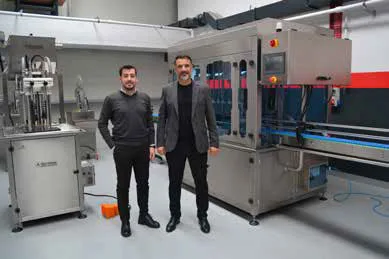
For the Food and Beverage issue we featured on the cover of our January edition, we were guests at the Arsanmak Makina factory in Şile. Emphasizing that their machines, built specifically for the agriculture, cleaning and cosmetics, mineral oil, and food sectors, are filling products in 81 countries around the world, we had the opportunity during our visit to interview Taner Özten and Çağkan Yeniay, Marmara Region Sales Engineer at Krohne Türkiye, on the details of the solution partnership between Arsanmak Makina and Krohne.
 Could we hear from you about how Arsanmak Makina has developed?
Our company was founded in 1975 by Mukadder Özten under the name Arsan Torna. When it was established, it carried out subcontract turning work. In 1991 we began small-scale manufacturing. In a 17-square-meter workshop in the Ümraniye industrial zone, we started making small fixtures and construction-machinery parts. When I returned from military service in 1997, we had a customer portfolio, but it was a portfolio of work that would always stay small. During our visits to trade fairs, filling machines caught our attention. We first began producing semi-automatic filling machines. Until 2004 we built semi-automatic machines. In 2004 we moved to premises of 100 square meters in Çekmeköy. There we manufactured our first fully automatic machine with 4 nozzles, controlled entirely by pneumatics. Until 2010 we produced machines of this kind for various companies. We then added another workshop and gradually grew the business.
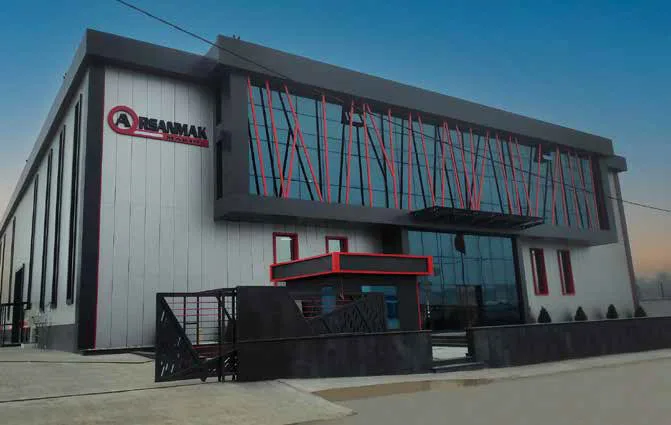
From Turkey, we began exporting to Africa. We found strong markets. Our machines are now operating in 81 countries. After that we grew from 2 workshops to 11, and when these areas were no longer enough we decided to make a new investment. In 2017 we were able to purchase the land for the factory where we are today. We then started construction in 2020. At the beginning of 2022 we moved into our new factory. We have been continuing production here for a year. Throughout this process we never left any of the colleagues we set out with halfway. Krohne is the only brand we have partnered with from the start and whose flowmeters we use. We currently purchase an average of 250 Krohne flowmeters a year and incorporate them into our machines. We have never left a customer halfway, and even when they called late at night we provided technical service quickly. After-sales service became our number-one principle. We made it a priority to stand by the machine we had delivered and by our customer, ahead of selling a new machine. That principle is what brought us this many customers.
So which sectors do you target and develop solutions for?
First of all, the chemical sector we work in includes detergents, chemical substances, and many similar branches. We defined 4 main sectors. They are agriculture, cleaning and cosmetic products, mineral oil, and food. We entered these 4 sectors very quickly and succeeded in standing out among the leading brands in Turkey. On the customer side, we have also built a solid portfolio.

May we get to know the machines you manufacture?
We manufacture filling machines. Arsanmak is preferred because it uses the highest-quality materials. We treat our machines like a product we would place on a shelf and that would earn our customer's approval there. We give appearance as much priority as function. We first approve the machines we manufacture ourselves, visually, and then present them for our customers' approval. We do not send our customers anything we do not approve of. In our relationships with our partners, we always exchange ideas. We build linear filling machines; our competitors produce rotary filling machines. But we do not aim to build only linear filling machines. When we want to produce a new filling machine, we first carry out an average of five years of R&D. There, too, we aim to be number one in the market. If we had tried to manufacture today and launch it tomorrow, we would not have sold this many machines today.
What factors are the components, equipment, and devices you use inside the machine trying to cope with? What kinds of challenging factors do you encounter in the field?
We use pneumatic components in all of our machines. To set a machine in motion, you use either automation or pneumatic action. We work with Festo and SMC, the world's leading brands in pneumatics. On a special product, and in chemicals, we use 316 stainless steel without exception; we do not accept 304 stainless steel as a substitute. We use the best material, without compromise. For automation components we prefer Delta Electronics. We previously worked with another brand, but it delivered a component in 50 weeks. We manufacture 8 to 10 machines at the same time. If we had continued with that brand, we would have had to close the factory. That is why Delta Electronics is now among the companies with the widest availability and a parts warranty on the market. That is why we work with them.
How do you decide on the machine design, and how do you determine which body material and which instruments will be used inside it?
Our customer sends us the bottle, the cap, and the label, and says, “I want to do this at a capacity of x per hour, and I want to do it at speed x.” We design the machine accordingly. We move the nozzles, dip them in and lift them out, and feed the lines automatically or with a robot. Sometimes our customer also wants us to place the product we have filled, capped, and labeled into a carton. We take it, place it in the carton, and stretch-wrap the carton; we then take the carton and set it down at the required point. We can provide end-to-end solutions in this area.
What does the project team do to shape the requested machine, and how does that affect production?
We have two machines prepared for the third quarter of 2023. For about six months now, three of our engineers have been carrying out R&D on the parts of this machine. Outside Arsanmak's existing production work, all of their time is spent on the R&D for these machines. Work on this machine may continue for another 7 to 8 months. R&D on this machine is underway, and material aging tests are being carried out. When these studies are complete, in the third quarter of 2023 we will install this machine at one of our customers and run trial production. This test process may last a year. After that we will make the improvements and updates and launch it on the market.
There are materials we use in our flowmeters… We have materials that would not occur to anyone else, yet we have established that the material delivers 100 percent efficiency in filling the product in question, and our customer has even said, “You have finally found it.”
What do you look for when choosing the brands you use in your machines, so that they last and filling quality stays consistent?
We tell our solution partners how many of which of their devices we will purchase in the coming year. We discuss this with the world's first-class companies. From the outset, we order from our hydraulic and pneumatic, flowmeter, pump, stainless-material, and profile-material manufacturers the equipment and materials we will need the following year. Arsanmak's suppliers know they will receive orders a year in advance. That volume is, on average, 30 percent more than the product we buy each year. Every year we target 30 percent growth. If we requested 100 flowmeters this year, we order 130 for the coming year. Because we work quickly and in series, we meet deliveries immediately from both our own stocks and our suppliers' stocks. We also provide our customers with spare parts quickly. We always keep a minimum stock of 5 machines, so that we can provide service at once. There is, however, the kind of part we have never used on any of our machines, a part we are making for the first time… For materials of this type we quote a lead time of 3 days at most. We can manufacture them within 3 days. The machine park at our factory has been designed for this.
On my first project we had purchased the wrong product from Krohne, and that product is still in our possession. On our first project we did not know flowmeters well, and we were not familiar with the mass and electromagnetic principles. On one of our products we had used an electromagnetic flowmeter when we should have used a mass flowmeter. We later found that the fluids were oil-based. We also did not know the calculations required for bore diameters well enough. After this first project we began to learn these requirements as well. When we first set out together, we saw that we had things to learn. Our customer was very well intentioned, and we corrected our mistake at once, before making much larger mistakes later. After that we began applying the correct flowmeter principles in the right places, across hundreds of units.
At the point we have reached, what kind of division of work is there between the two brands?
We generally prepare the projects ourselves for fluids we know well. If a product we do not know comes in, we consult Krohne. We take their recommendations according to the fluid type and the required flow rate. We also refer many of our customers to Krohne. We only purchase flowmeters, but we also have customers who need a complete system. For them, too, we recommend Krohne's solutions.
What do you expect in order to be able to act quickly after the sale?
We are very fast, but for our partners to be just as fast they need to hold stock. Our products carry a code, and we can deliver a failed part within a single shipping time. We expect the same speed from our suppliers, of course. Service is the most important factor in being chosen.
Do you recommend a maintenance interval for your products?
As with your vehicles, our machines have a set maintenance interval. Our products contain machine parts that are always easy to find. We recommend maintenance every 6 months. We make maintenance agreements for this. After maintenance has been carried out, we can extend the warranty period by a further 6 months.
Will there be new projects you carry out together with Krohne in the period ahead?
The work we mainly do, and know very well, is filling, capping, and labeling. For that, how we feed a bottle matters. How are these bottles placed on the line automatically, and how are they placed into cartons automatically, without being touched by hand? On the showroom side we currently have our robots, our end-of-line solutions, and our AGVs. In AGVs, we work with one of the world's leading AGV companies. I believe that in the period ahead we will reach much greater potential in Turkey. The machines we aim to manufacture with Krohne next year are rotary machines. If we use 8 flowmeters on a machine today, next year we aim to use 32.
If Krohne's engineers gave us the design and the project for such a machine now, we would start production tomorrow. Arsanmak's production has that potential. It is the only company in Turkey with laser cutting in-house, bending in-house, and 8 to 10 CNC machining centers and CNC lathes in-house. In terms of our potential, we are the largest among companies that produce linear filling machines.
Çağkan Yeniay, Krohne Türkiye Marmara Region Sales Engineer:
Arsanmak is a company that can keep up with every trend in the world and offer solutions capable of meeting every need in filling and packaging. As Krohne, we are one of the world's leading companies in instruments based on both the electromagnetic principle and the mass principle. By meeting their needs with the right product, we also support them on every project they carry out. I believe the fine cooperation between us will continue.
Which Krohne products are used on Arsanmak machines? Çağkan Yeniay:
We use two types of product. One of them is our product called Batchflux, which operates on the electromagnetic principle. The essential point here is that the fluid must be conductive. This product, which has a ceramic tube, is highly durable. It offers high repeatability and stable measurement over the long term. Hygienic connections are also available. This product was developed especially for filling applications. On the other side are our Optibatch products, suited to the mass principle. This product is used when mass is to be measured directly, or with non-conductive fluids. These are products selected according to the corrosiveness of the fluid, its flow behavior, and its resistance. They offer very high accuracy, repeatability, and reliability. They have a range of hygienic connections. Pressure loss is low, and they were developed for use on filling machines.
What solutions do you offer when there is a problem with the products?
When any problem occurs with these products, our technical service gets in touch quickly. The first intervention is made on the line, but if these recommendations are not sufficient, the product is sent to our service department. Product tests and checks are carried out. If the checks show that it cannot be repaired, or that there is a fault originating in production, we supply our customer with a new product.